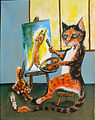
Your puppy ate what?
- Mary Malucci
- Mar 15, 2023
- 3 min read

Updated: Jan 29, 2025
In veterinary medicine, the phrase "foreign body" is shorthand for a situation where a pet has eaten a nonfood item that has become lodged in the stomach or intestines and needs to be surgically removed. Young dogs, especially puppies, are the worst offenders. However, sometimes old dogs and cats of all ages will eat nonfood items as well.
Usually, the first symptoms a pet owner notices are loss of appetite and vomiting. The pet may show signs of nausea (excessive drooling or grimacing) or abdominal pain (hunching up in the middle, tender when abdomen is touched). When discussing the history with the owner, we are sure to ask if this pet has a history of eating nonfood items. We expect our dogs to chew and even expect damage when they are puppies. If your dog gnaws on his chewies for long periods of time, it's less at risk than a dog who breaks off large pieces of chewie and swallows them whole.
Nonfood items commonly eaten by dogs include articles of clothing like underwear and socks, mulch, sticks or rocks and canine or children's toys that are easily swallowed. Most of these items are swallowed whole and eventually lodge in the intestines. When the foreign body is a large discreet piece, it is often easier to remove. The length of time the object is stuck determines the amount of damage to the surrounding intestinal tissue. If the damage is too bad, the veterinarian may remove a section of intestines.
Cats typically don't eat large nonfood items the way dogs do. They seem more attracted to ribbons and string, causing a linear foreign body. Instead of the foreign body being in one discreet location, it is spread throughout the intestinal tract. As the pet's body tries to pass the string and is unable to do so, the intestines start bunching up around the string, causing widespread bruising along the entire intestinal tract. Dogs are not immune to linear foreign bodies. They will chew on carpet and blankets by pulling a thread and swallowing continuously. Linear foreign bodies are more life threatening because of the extensive damage they do.
Cats and small dogs are notorious for eating hair bands and rubber bands. These items will get bunched up and gather other debris, steadily getting larger.
Once the radiographs confirm a foreign body obstruction, our best recommendation is always surgery as soon as possible. The only time we do not pursue surgery for an intestinal foreign body is when the object has already reached the colon. Usually if the object gets this far, the pet will pass it on its own. We often recommend monitoring stools for foreign material.
After admittance to the hospital, IV fluid therapy and pain medications will be initiated. Bloodwork will be done to assess liver and kidney function, which affects the pet's ability to handle anesthesia. If the pet is not stable, supportive care will be provided until it can tolerate anesthesia. During surgery, the foreign body and any severely compromised tissue will be removed. After surgery, we monitor pets for 24-48 hours. We continue IV fluid support and pain meds along with other meds necessary to encourage gut healing.
Our goal after a foreign body removal surgery is to get the pet eating again. Often the rate of recovery from surgery reflects how long the foreign body was lodged. When it is easy to locate and remove and all the surrounding tissue looks healthy, these pets recover readily, often going home after 24 hours. If the foreign body is more difficult to remove and there is visible damage to the surrounding tissue, these pets take longer to recover and may require more than 48 hours in the hospital.
This situation is traumatic enough to the pet's gastrointestinal system once. When the pet continues to eat nonfood items and needs multiple surgeries, the prognosis gets worse with each surgery. Every time we surgically manipulate the intestines, we increase the possibility of the intestines adhering to each other or to other organs in the abdomen. This can complicate the surgery greatly and eventually make surgery impossible.
Why dogs and cats eat nonfood items can vary from pet to pet. As pet owners, our best approach is to monitor our pets and keep their environment clear of appealing nonfood items. Boredom is frequently cited as a reason for eating random stuff so providing more environmental enrichment and positive interaction may help.

Comments